Perennial Favorites
/Ahh, perennials. I love starting them from seed, watching them grow and mature, and saving labor every year they’re in the ground. Growing perennials is a long game, as they usually take two to three years to show how they’ll perform. Some perennials are short-lived, meaning that they will only thrive for a handful of years, while others can live happily for decades.
I’ve tried to be selective in choosing my favorite perennials for each season, listing specific cultivars and detailing what I like best about each. All of these plants do well for me in northwest Montana, zone 5b. Many of them will thrive in a variety of climates, but of course I can only share my experience.
Whenever possible I try to start my perennials from seed, although some can only be purchased as plants or roots. Starting perennials from seed is the most cost-effective method, but it does take some patience and often requires research to learn what the specific seed requires (stratification, an early start date, etc).
Here are my current favorites, organized by their primary bloom season:
Spring / Early Summer
Delphinium. My current favorite cultivars are Delphinium cultorum ‘Giant Pacific Summer Skies’ and Delphinium x belladonna ‘Cliveden Beauty’ – both light blue. ‘Summer Skies’ produces tall, full spikes, while ‘Cliveden Beauty’ has more airy blooms. ‘Summer Skies’ has been going strong for several years and is a little less prone to powdery mildew than other delphiniums I’ve grown. ‘Cliveden Beauty’ was a new addition this season, so I don’t yet know how hardy and productive it will be.
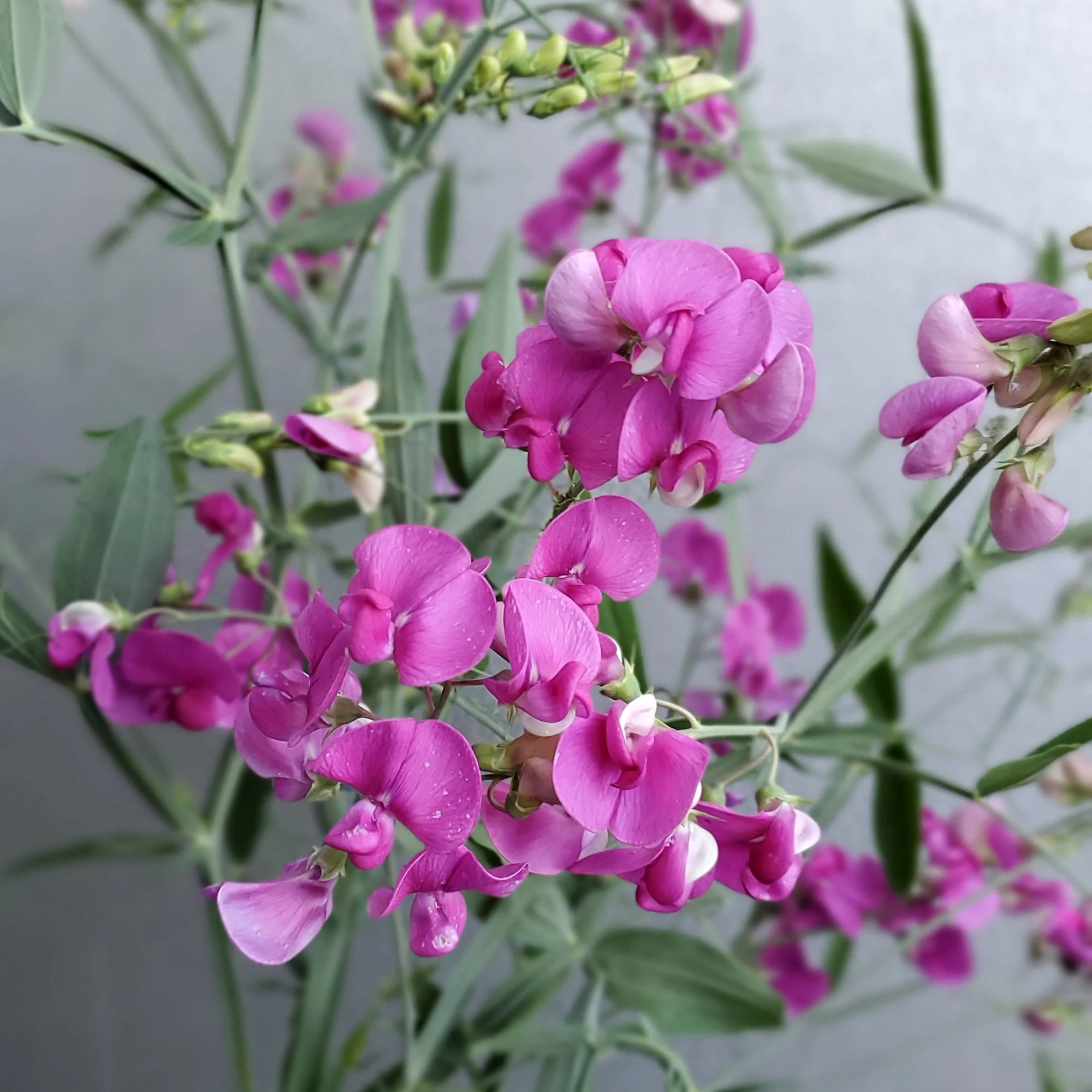
Everlasting Sweet Pea (Lathyrus latifolius). The perennial sweet pea isn’t fragrant like the annual variety, but it’s vigorous and easy to maintain. The blooms and vines are also hardier, and therefore easier to use in bouquets and installations. After I put the seeds in the ground they took 18 months to grow, but now the vines are bigger and taller every year. Be sure to provide a strong trellis or fence. I like how the hot-pink blooms fade to purple-blue as they age.
Forsythia. I love the bright yellow blooms in early spring, but I really love these shrubs for their glossy dark green leaves. This is one of my best foliages for bouquets, wearables and installations. And now that my shrubs are well established and vigorous, I don’t mind cutting a few handfuls of branches every year. They are low-maintenance and very hardy.
Foxtail Lily (Eremurus robustus). A few years ago I decided I needed to grow eremurus, after seeing them in lots of photos one summer – and I’ve been smitten ever since. I’ve been pleasantly surprised by how easy they are to grow and care for. As perennials they prefer dry winter soil with good drainage, though they’ve survived my heavy clay surprisingly well. They’re in beds that are slightly mounded and well mulched in winter to help the crowns stay protected and dry. I also have a row of plants in my high tunnel that bloom a week or two earlier than those outside. The tall spikes are stunning in large arrangements, and the bees absolutely love them.
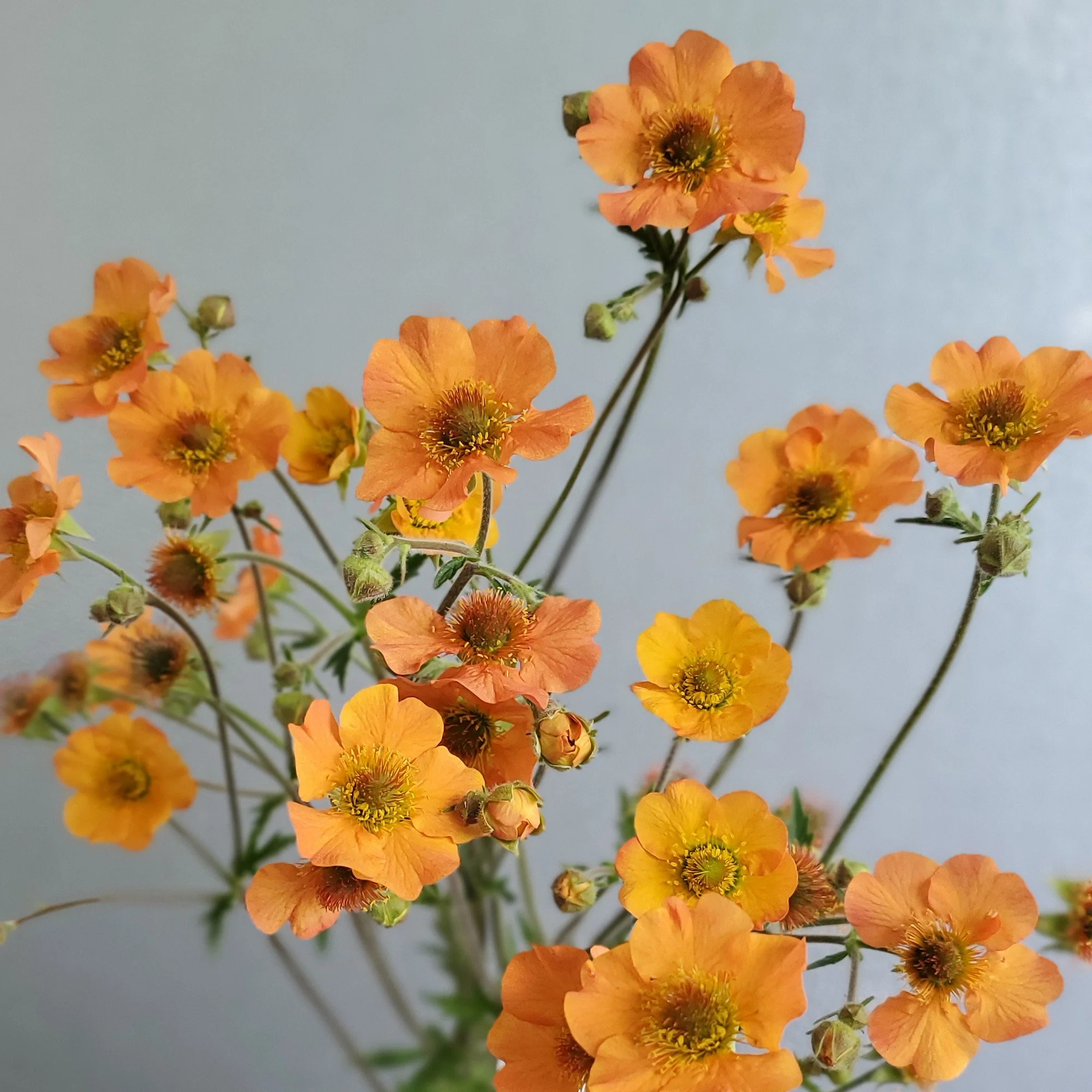
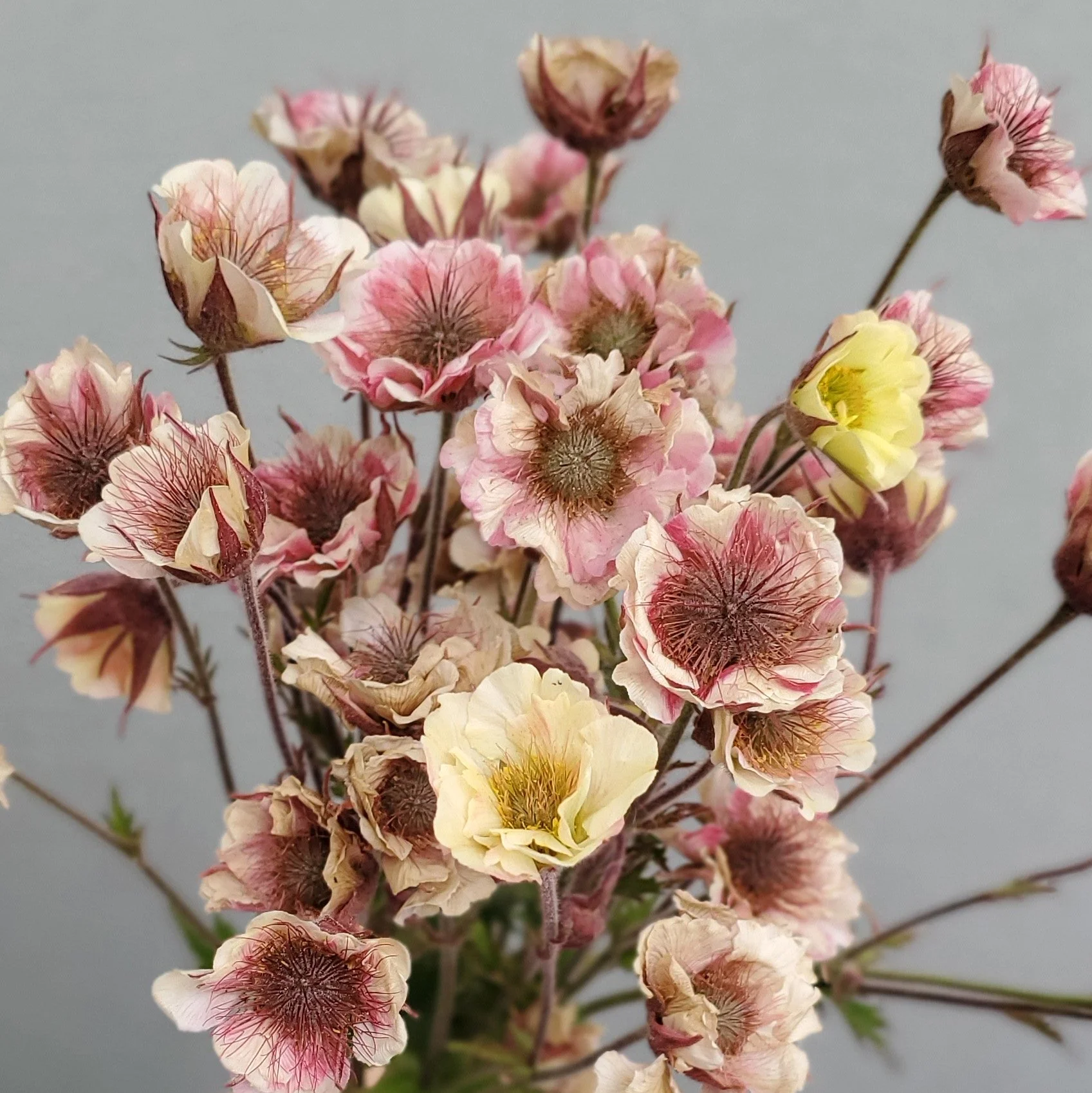
Geum chiloense. Possibly my favorite cut flower, geum is the perfect late spring bloom: delicate-looking yet hardy, with long sturdy stems and a shape that adds the perfect “wildflower” touch to any bouquet. I’ve started some from seed and bought other plants from local nurseries. My favorite cultivars are ‘Totally Tangerine’ (super long stems, prolific blooms) and ‘Pretticoats Peach’ (shorter stems but a lovely color). I also love the golden-yellow ‘Lady Stratheden,’ one of the few cultivars you can start from seed.
Goatsbeard (Aruncus dioicus). These shade-loving plants were relatively easy to start from seed and took a few years to become established. I have a handful of them, spaced about 3’ apart, and they’ve filled in nicely. In late spring they send up ivory plumes that gradually fade to tan and then brown by late summer. They add a whimsical flourish to large arrangements with peonies and other late spring blooms. The large leaves can be used too, as long as they’re in water.
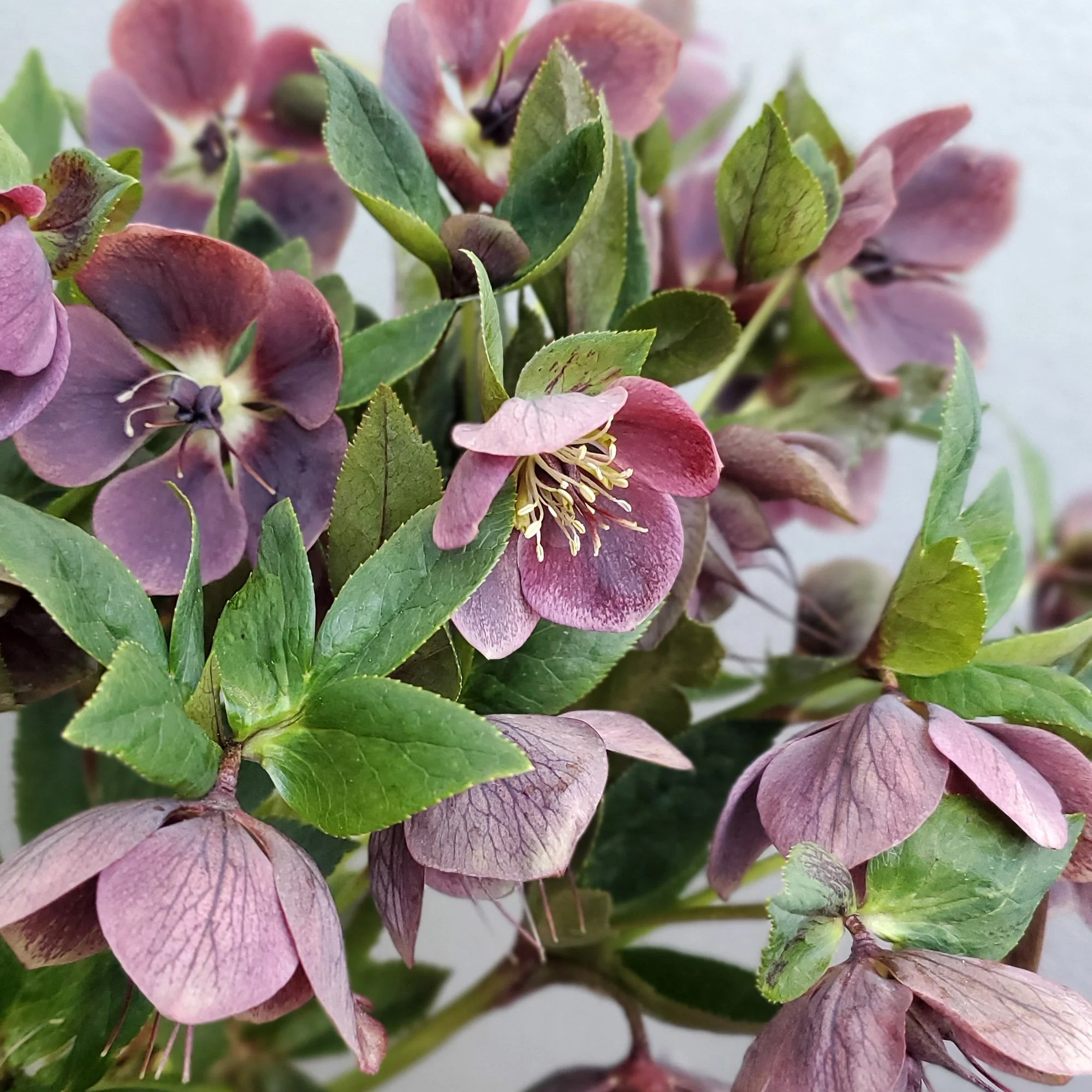
Hellebore (Helleborus orientalis). A few caveats about hellebore: they bloom very early when there isn’t much else in flower; it takes some experience to know when to harvest them; and they are slow growers. But they’re so uniquely beautiful and so cold-hardy that I think it’s worth it to grow a few. I especially love ‘Red Lady’ (long stems, burgundy blooms that fade to mauve) and ‘Pink Frost’ (icy-pink blooms that fade to dusty rose).
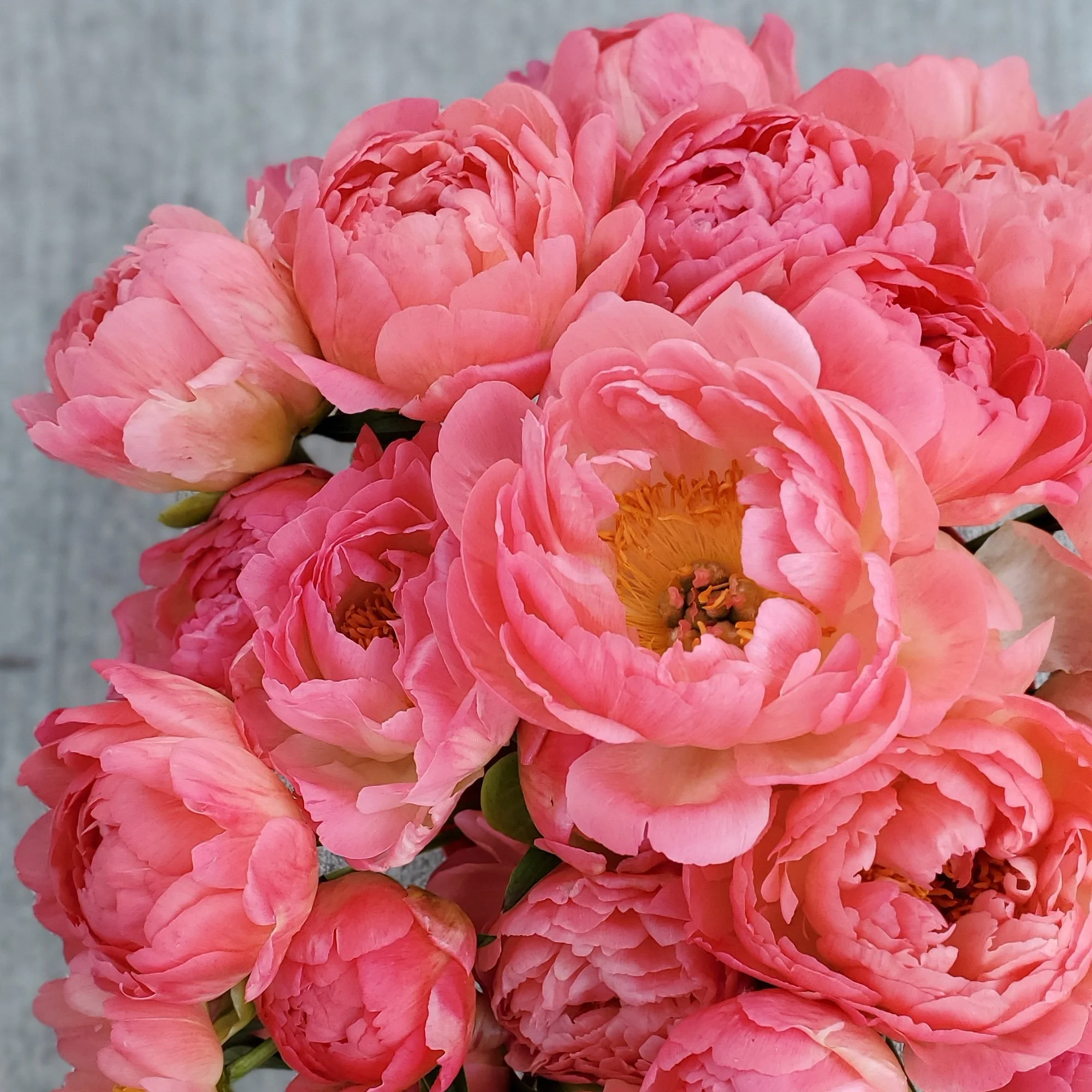
Peony (Paeonia lactiflora; Paeonia officinalis). It wouldn’t be spring without peonies. These plants can live for decades, even generations, and the stunning blooms are often fragrant. Bees love them and brides love them. A few of my favorites are ‘Coral Charm’ (bright coral fading to light pink and then cream), ‘Duchesse de Nemours’ (ruffly, pure white, gloriously fragrant) and ‘Sarah Bernhardt’ (soft pink with a lovely scent). I also have many unknown varieties, mostly single-petaled blooms with open centers that have a shorter vase life but more pollen for the bees to enjoy.
Summer
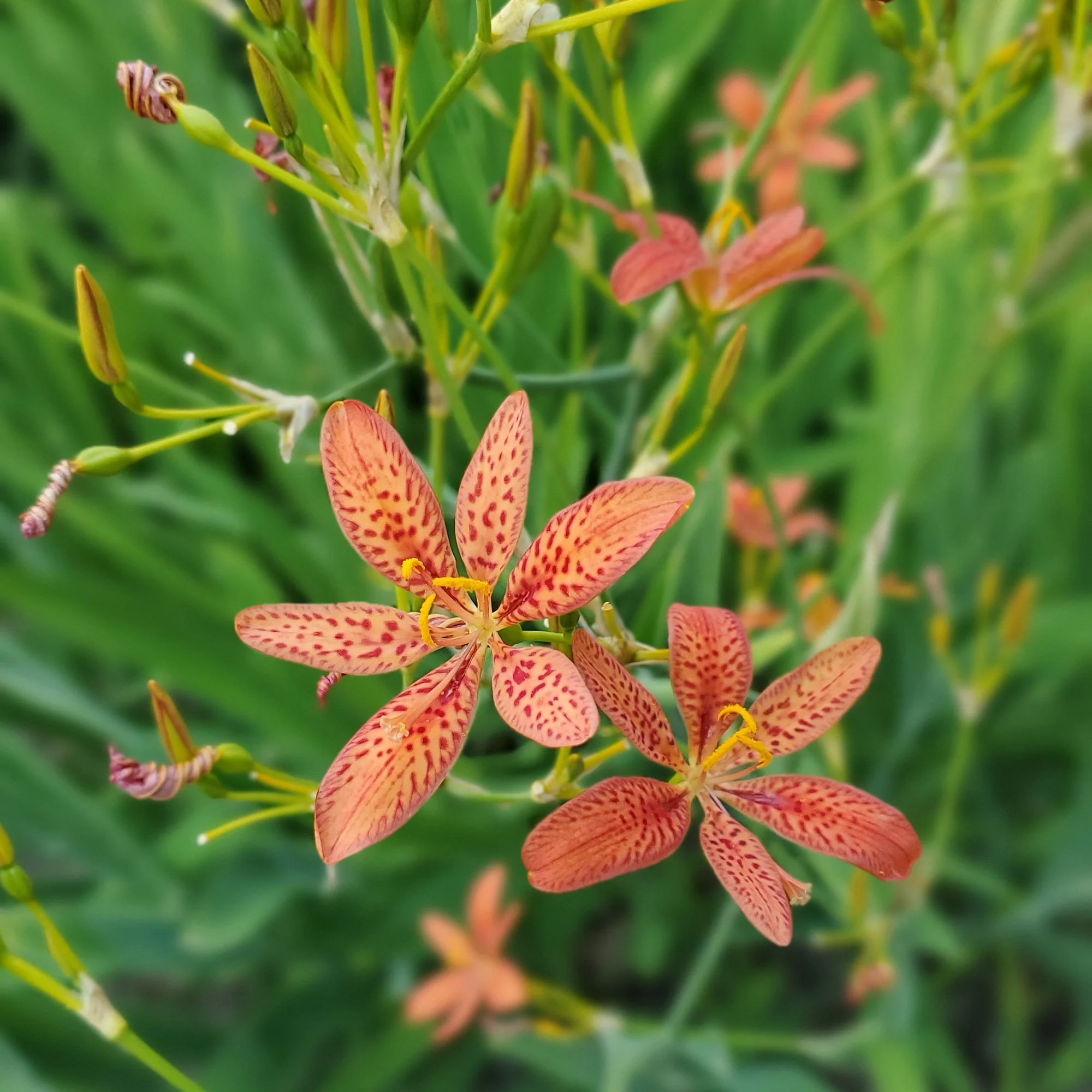
Blackberry Lily (Iris domestica ‘Freckle Face’). These tall plants are stunning, with freckled orange lily-shaped blooms and iris-like leaves. Each bloom is short-lived but there are multiple flowers on each stem; after blooming the petals close into a little swirl. In late summer the seedpods crack open to reveal a cluster of seeds that looks like a blackberry and has a sweet fragrance; these pods can be dried.
Butterfly Weed (Asclepias tuberosa). The happiest orange you’ll find in midsummer, this asclepias has large blooms that add a tropical flair to any arrangement. It’s one of the few asclepias without sappy stems, which makes it easy to harvest and design with. I started my plants from seed several years ago, and they’ve been healthy and happy with minimal attention. Occasionally I’ll lose one over the winter, probably due to frost heave.
Coneflower (Echinacea purpurea; Echinacea angustifolia). An excellent perennial for lots of midsummer blooms, echinacea is available in a wide range of colors – white, pink, red, purple, orange, yellow and even green. After many of my plants became infected with aster yellows, I’ve had to remove most of them. My native plants (echinacea angustifolia) are still healthy, so I plan to grow more of those. All the varieties are good cut flowers, and I also like using the cones without the petals as a textural accent in bouquets.
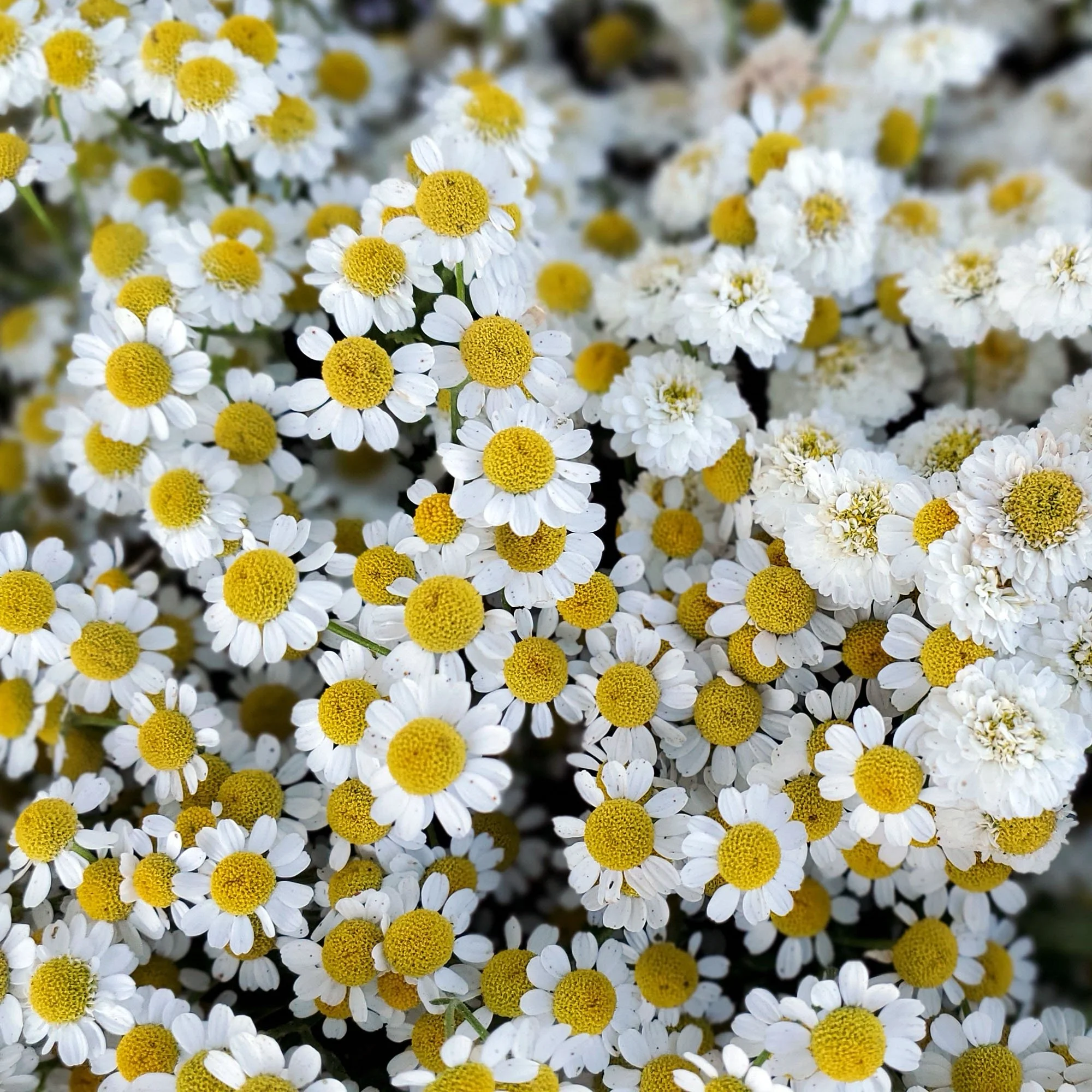
Feverfew (Tanacetum parthenium). Everyone seems to love these little daisy-like blooms. They bloom abundantly in midsummer, and I’ve found that the happiest plants are the self-sown ones. They don’t always survive the winter, so I usually let them go to seed and also start a few new plants every spring. My favorite cultivars are ‘Campagne’ (white petals with a yellow center, with airier and sturdier stems than other cultivars), ‘Magic Single’ (similar to ‘Campagne,’ but with more overlapping white petals) and ‘Tetra White’ (fluffy white petals with a smaller yellow center).
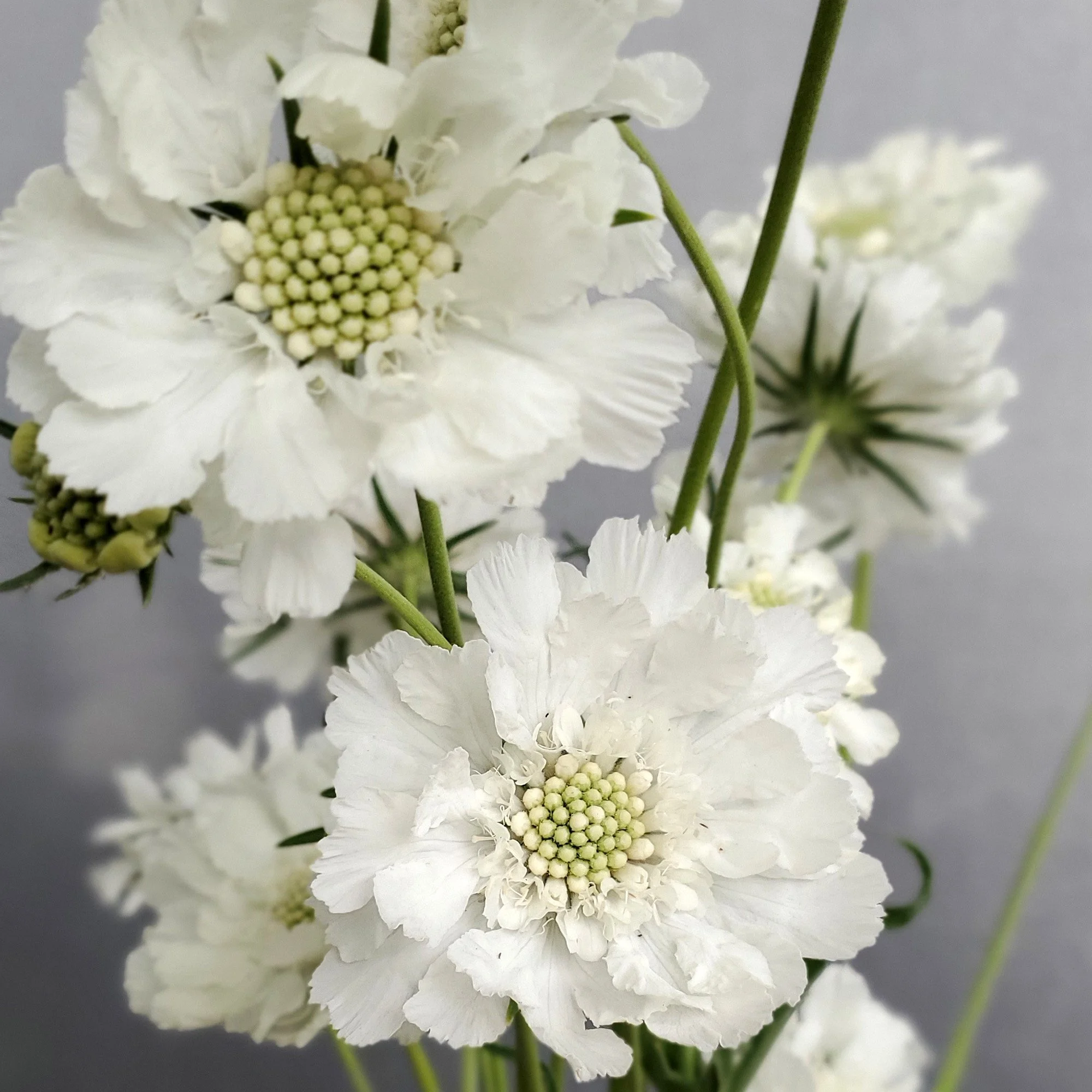
Scabiosa caucasica ‘Fama White.’ From early to late summer, these scabiosa are prolific bloomers. They’re the perfect ruffled, romantic yet wildflowery bloom for every type of arrangement. They’re also stunning in the garden, with tall branching stems that move in the breeze. The seed is a bit expensive, but the plants are worth it. This year I added another handful of plants since I never seem to have enough of these flowers.
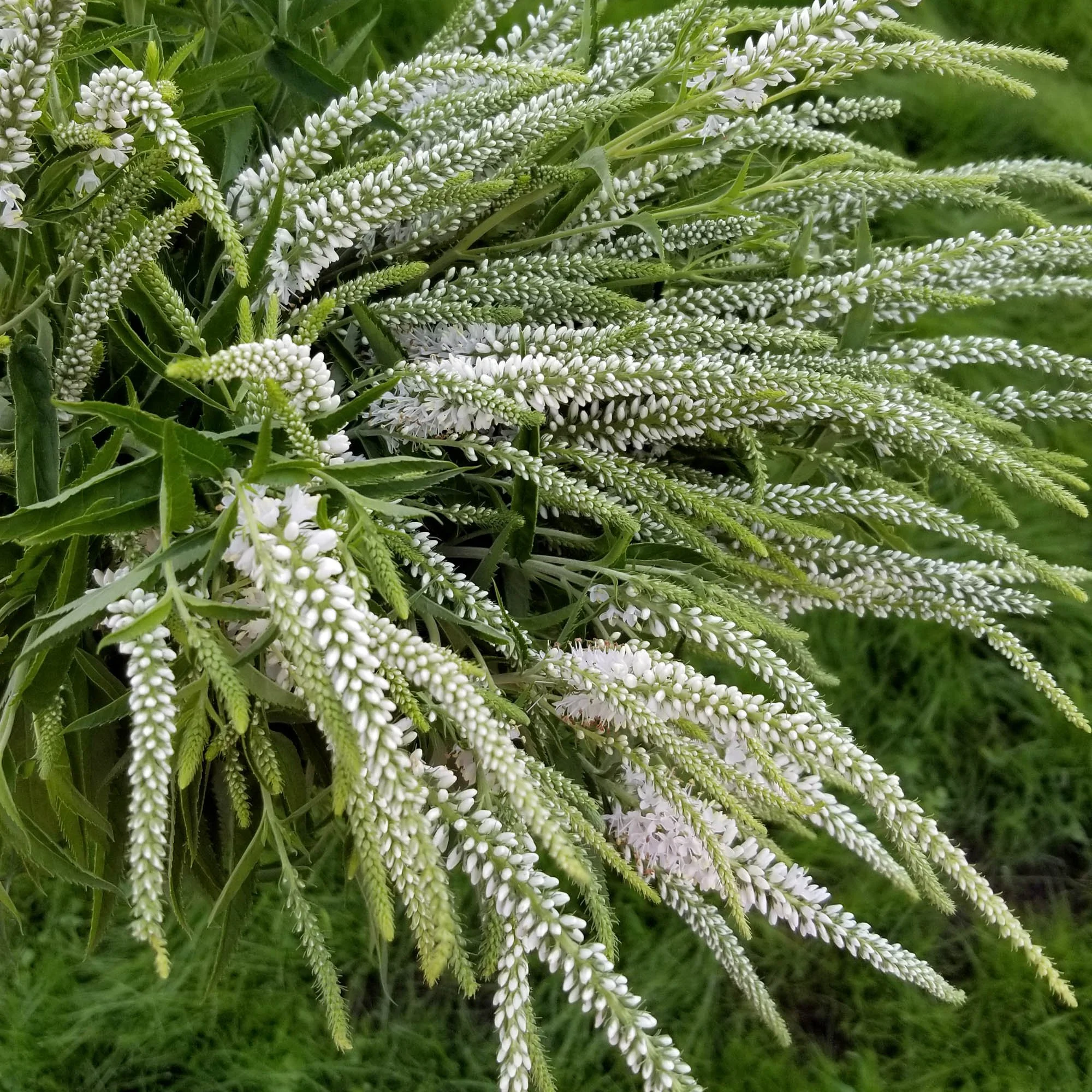
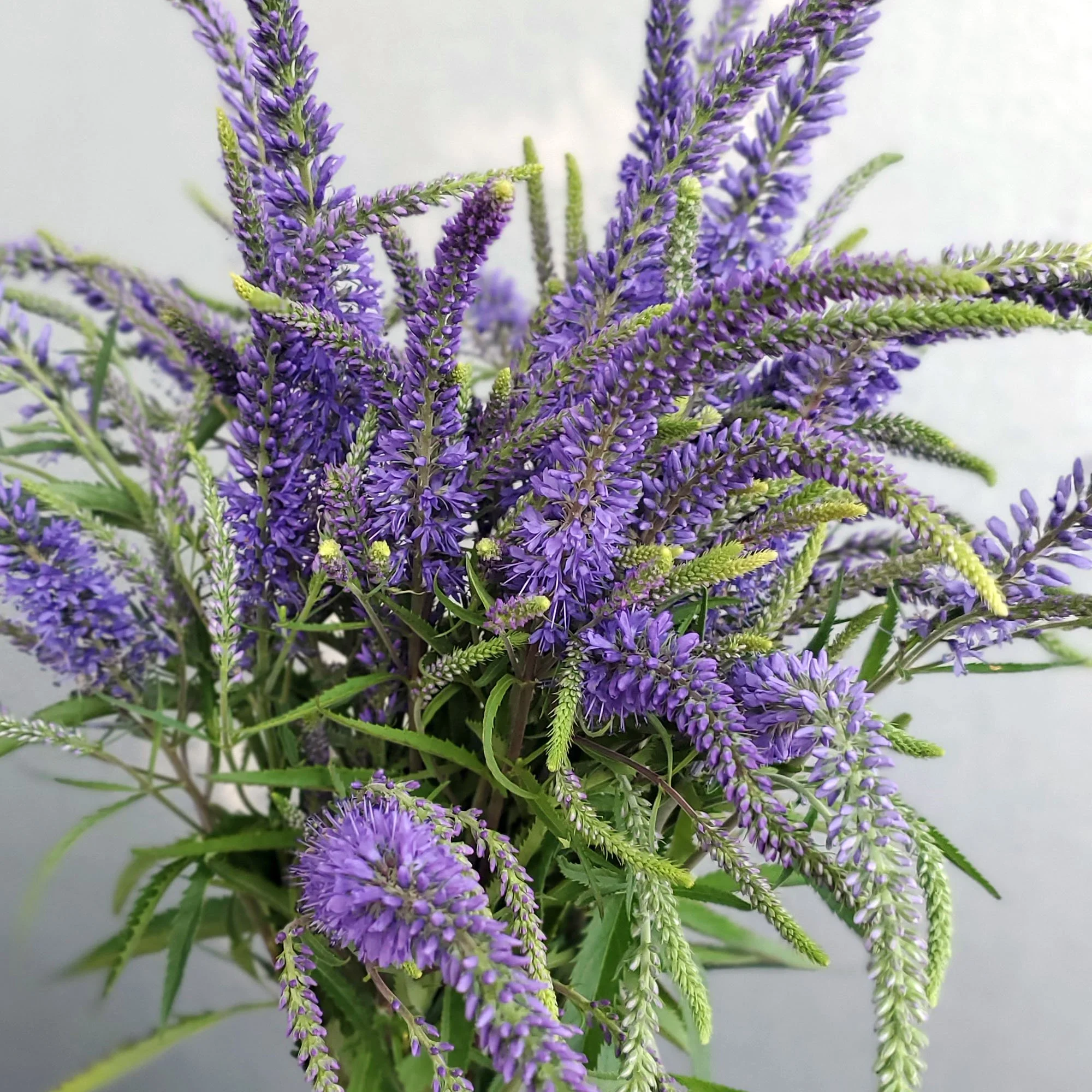
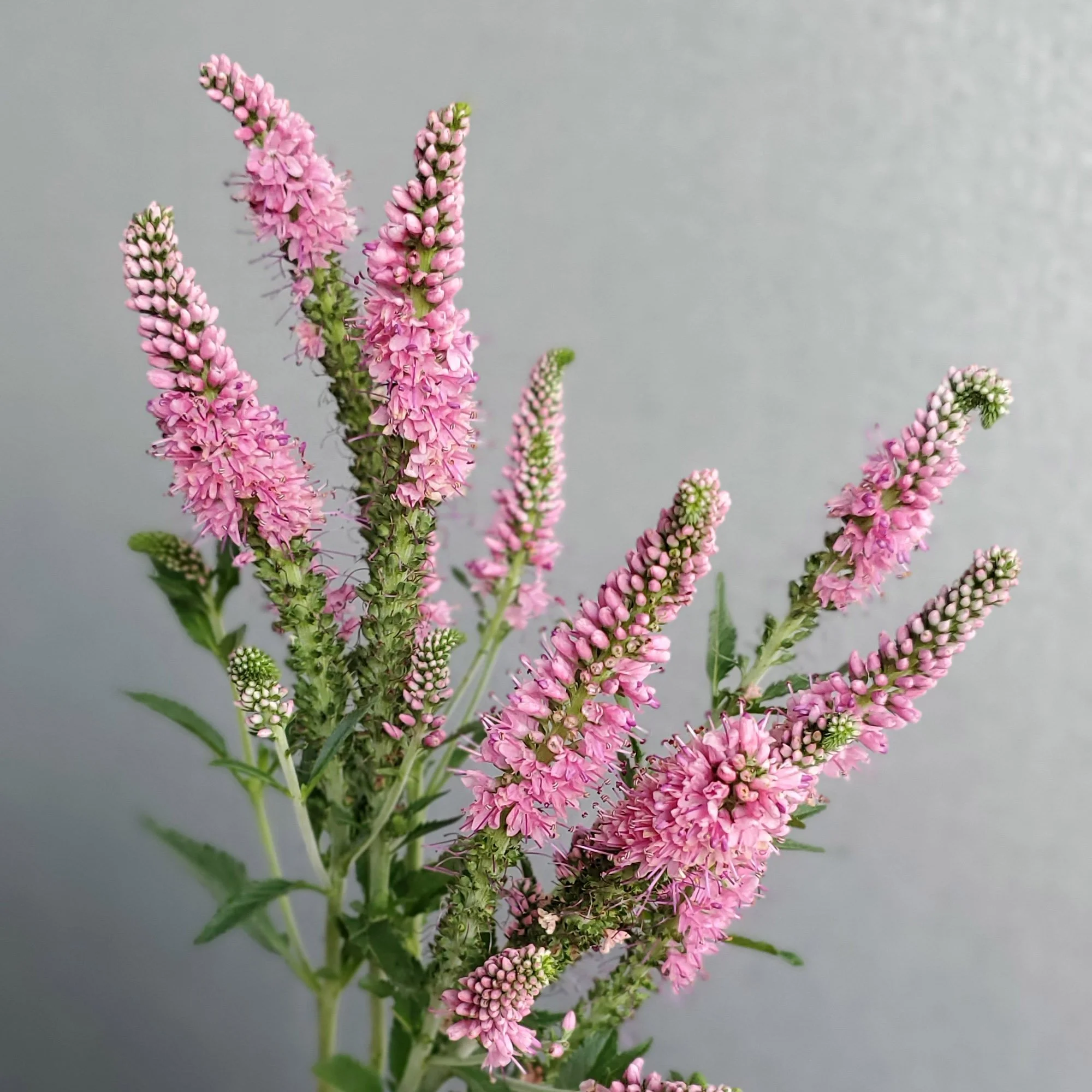
Veronica. One of the first perennials I started from seed, veronica has been a staple crop for years. I trialed several blue cultivars before finding my favorite, Veronica spicata ‘Blue Spires’ (long sturdy stems and whimsical blooms in a medium purple-blue). My other favorites are Veronica spicata ‘Alba’ (white) and Veronica longifolia ‘First Love’ (pink). Most veronicas will rebloom in late summer if cut back after their first flush. ‘Blue Spires’ is an especially good rebloomer.
Late Summer / Fall
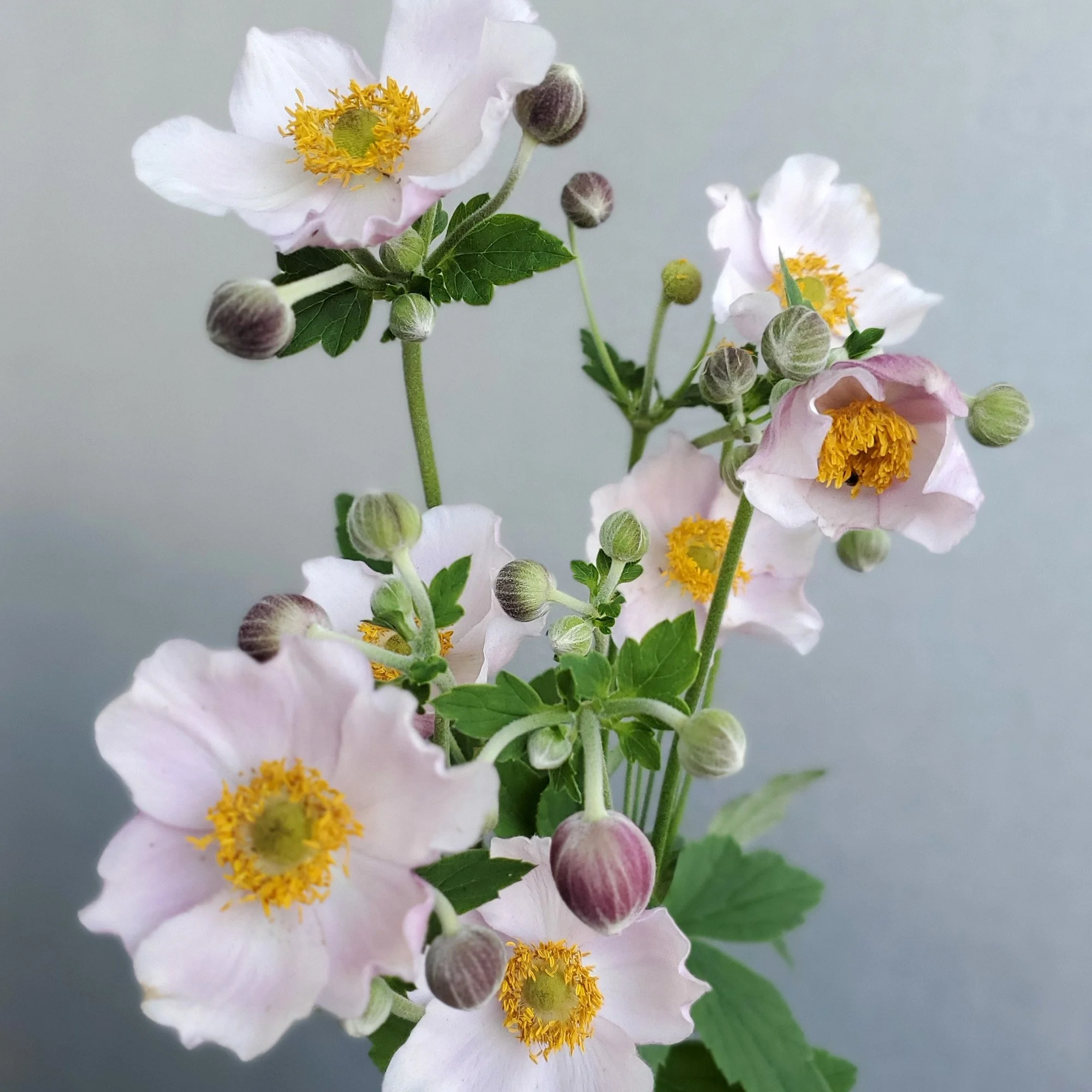
Japanese Anemone (Anemone hupehensis). The star of late summer, these tall plants produce beautiful blooms in shades of pink and white. After starting a handful of plants from seed, they took a few years to reach full height (close to 4’ in part shade). The soft pink blooms are perfect for late summer weddings.
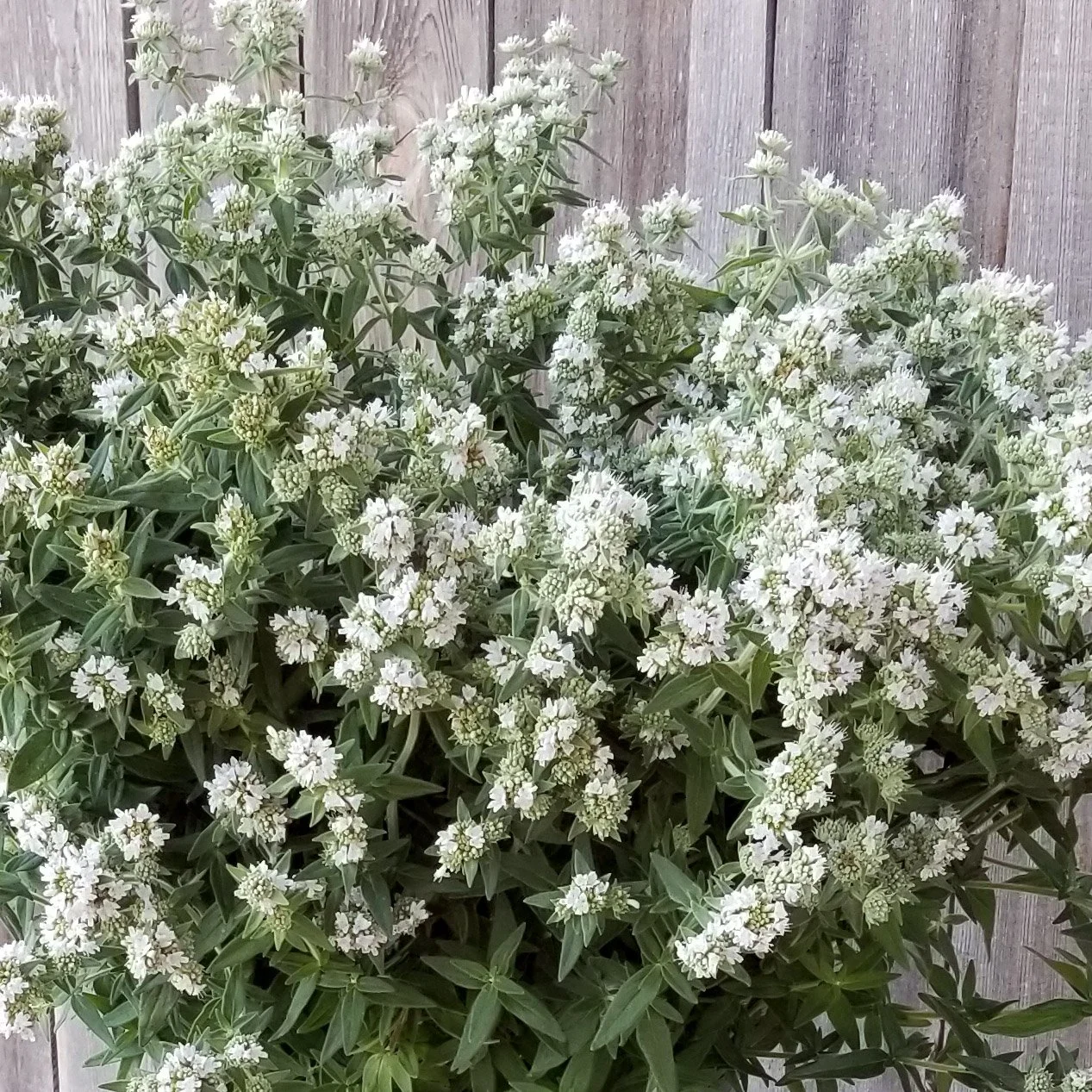
Mountain Mint (Pycnanthemum pilosum). In late summer when the mountain mint is blooming, it’s always covered in bees – especially the smaller native bees. The leaves of mountain mint have a bright, clean scent. These plants can get quite tall and could probably use support, though I always forget. I like using the cut stems as a supportive base in arrangements, since the stems are usually straight and sturdy. The blooms also add a nice fragrance to bouquets and wearables.
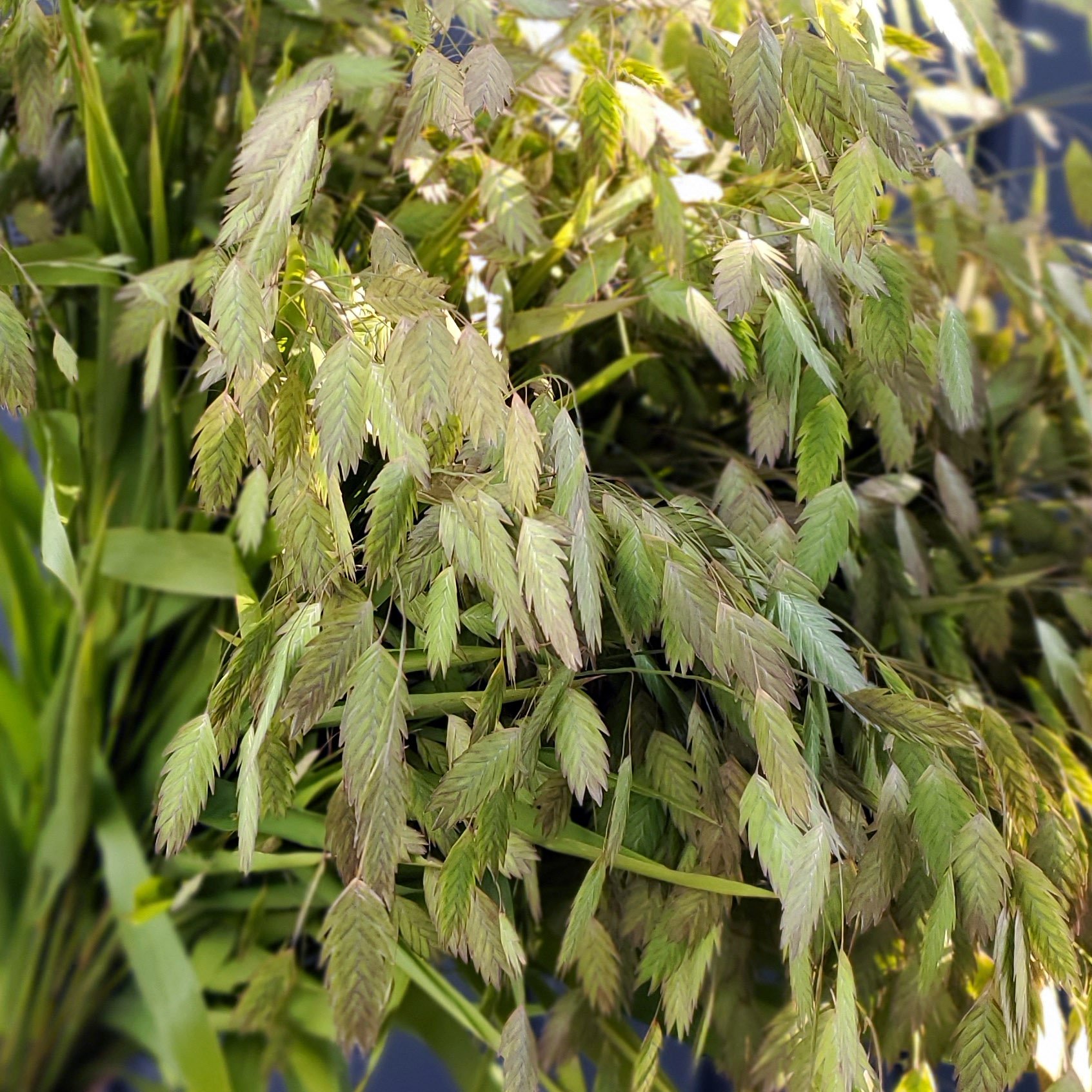
Northern Sea Oats (Chasmanthium latifolium). This is one of the plants that I can easily ignore until late summer, when the tall arching seedheads start showing off. The stems bend and sway in the breeze so beautifully. As the season progresses, they fade from green to soft tan and then to brown if you leave them through the winter. They dry very well: hang in bunches for straight stems or dry them standing in an empty vase to keep their natural curve.
Sedum. If you’re growing sedum for cutting, be sure to choose a tall variety. There are many types of sedum, some of which are ground covers. I have Hylotelephium telephium ‘Emperor's Wave’ (deep pinkish-red flowers that fade to red-brown) and Hylotelephium spectabile ‘Autumn Joy’ (lighter pink blooms that deepen to bronze). Sedum is useful in all kinds of arrangements, from bouquets to wearables to installations. It lasts well out of water and also makes a supportive base for other flowers.